
Eloquence or Intervention? Explaining the Miracle of the Qur’an
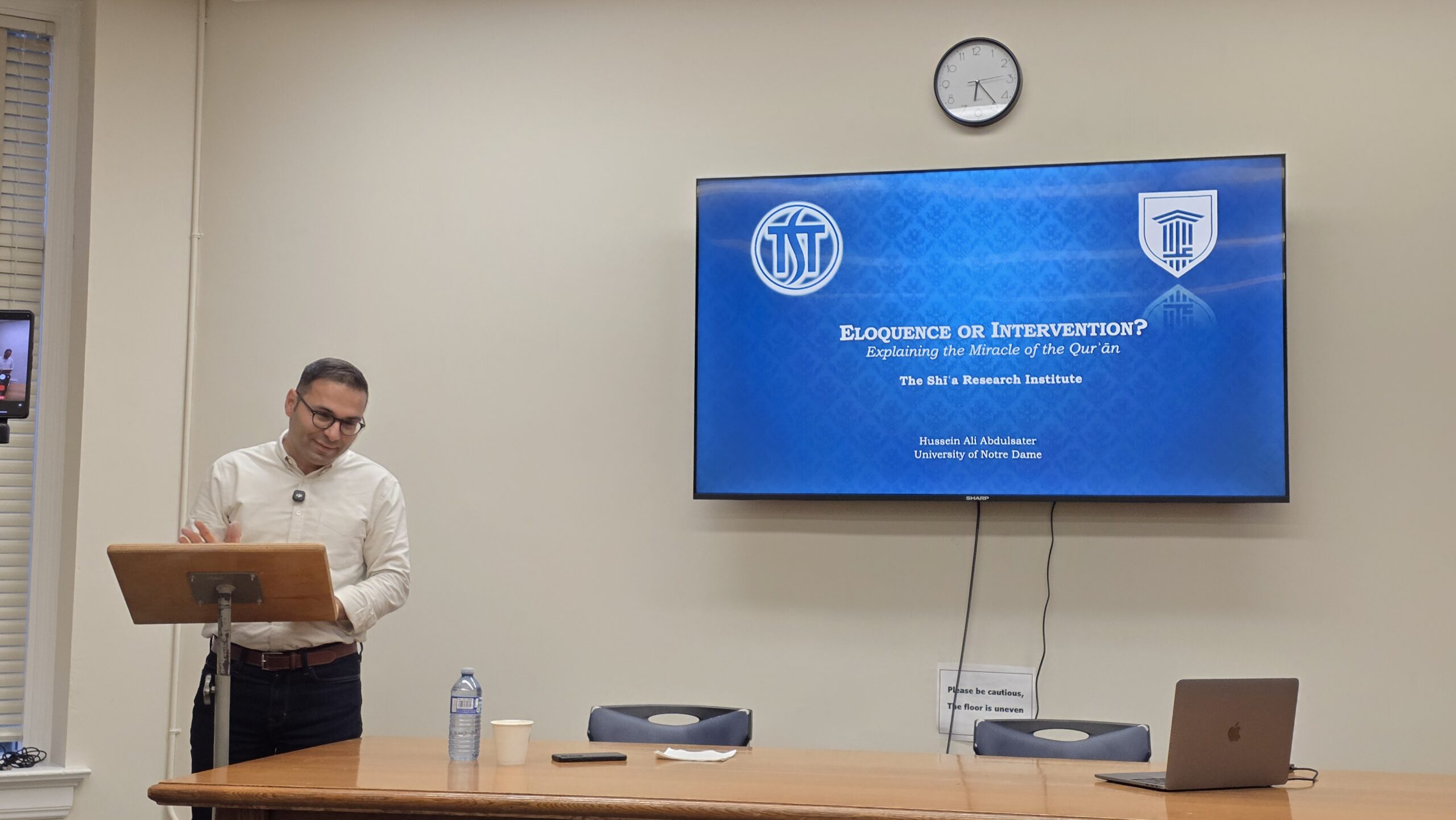
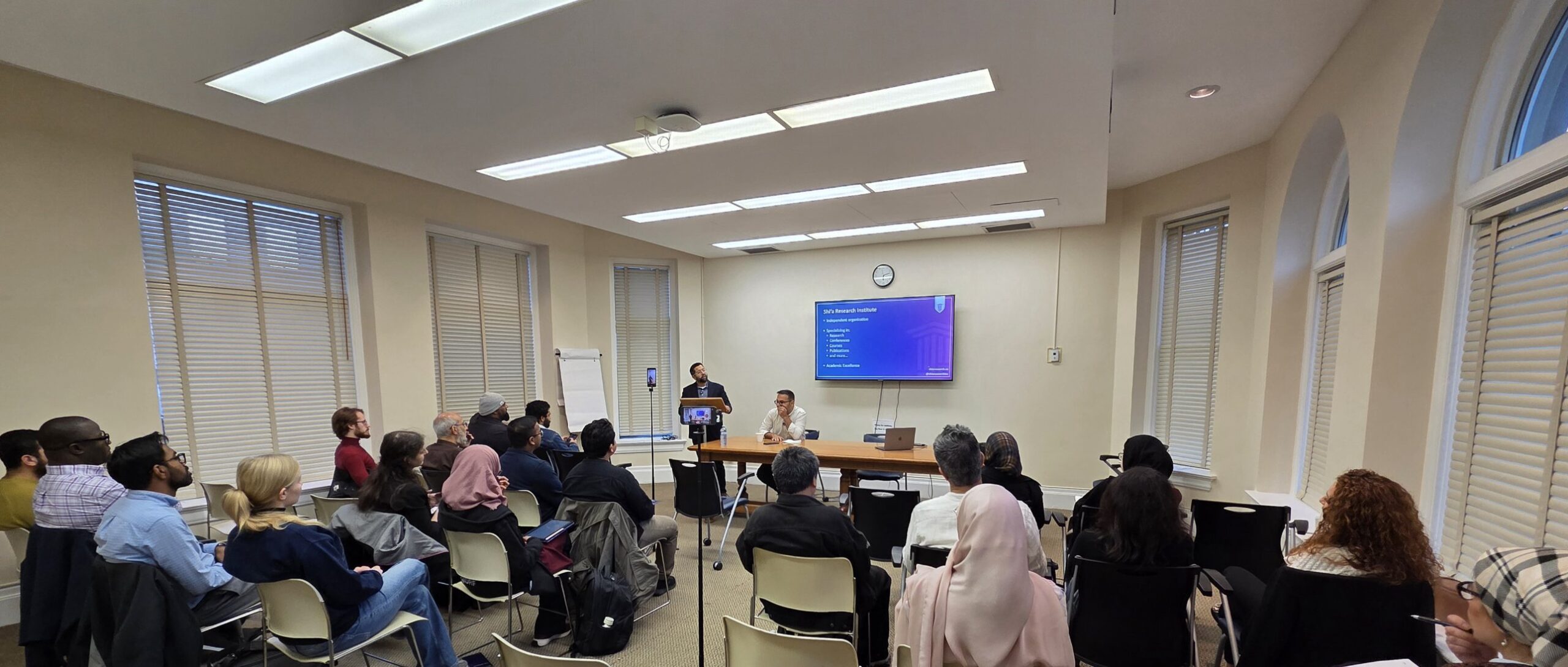
On Monday, October 19th, 2026, at 6:00PM, we gathered at the Toronto School of Theology for a presentation by Dr. Hussein Abdulsater (University of Notre Dame), the 2026–2027 Distinguished Scholar Fellow at SRI.
This engaging and thought-provoking discussion was held in the Jay Boardroom on the first floor, at the Toronto School of Theology, at the University of Toronto. This event was co-sponsored by the Shi’a Research Institute and the Toronto School of Theology.
It is a mainstream Islamic belief that the Qurʾān is itself a miracle, the standing proof of the Prophet’s message. Most scholars have located that miracle in the Qurʾān’s supernatural eloquence, a beauty beyond human capacity to match.
Yet from the earliest centuries of Islam, some thinkers took a strikingly different view: that the Qurʾān’s eloquence lies fully within human reach, and that the Prophet’s Arab adversaries failed to produce a rival text only because God intervened to divert them from doing so. This is the ṣarfa, or “diversion,” doctrine, held by major Shiʿi and Sunni figures alike.
In this lecture, Dr. Hussein Abdulsater traced the intellectual origins and the varieties of the ṣarfa doctrine, and asked what this centuries-old debate means for how Muslims understand the miraculousness of the Qurʾān today.
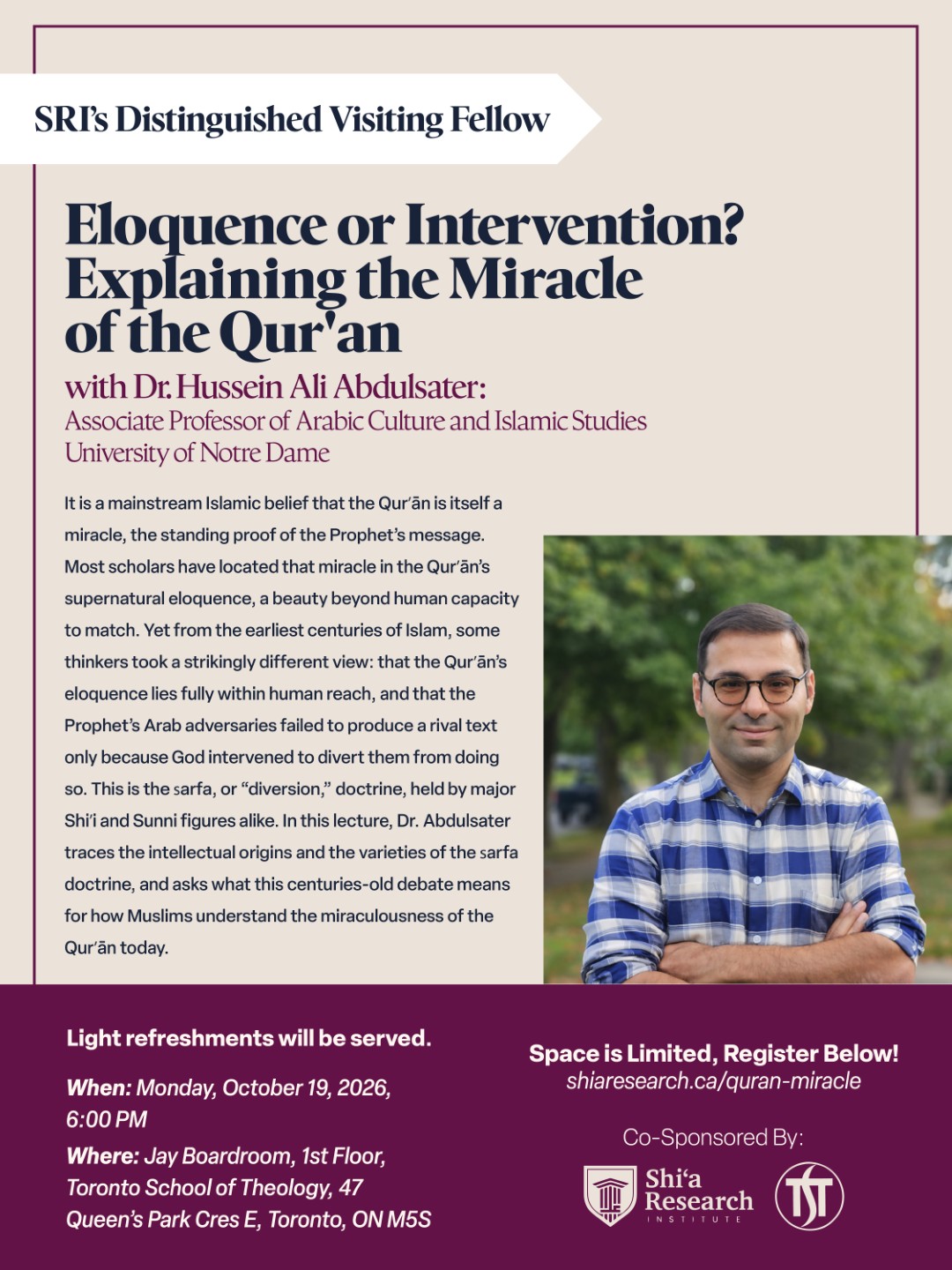
Dr. Hussein Ali Abdulsater is Associate Professor of Arabic Culture and Islamic Studies at the University of Notre Dame. His research focuses on Islamic intellectual history, particularly the development of theological schools, the formation of sectarian identities, and the various modes of rationalism expressed in Islamic theology and Arabic literature. He is the author of Shiʿi Doctrines, Muʿtazili Theology: al-Sharīf al-Murtaḍā and Imami Discourse (2017) and Al-Jāḥiẓ and Religious Knowledge: A Forgotten Islamic Rationalism (2025), both published by Edinburgh University Press.
Event Location:
Jay Boardroom, 1st Floor
Toronto School of Theology
47 Queen’s Park Cres E,
Toronto, ON
M5S 2C3